We finally have the outcome of the Curriculum and Assessment Review with the publication of the final report today. Many thousands of educators have been waiting for months.
In July 2024, the government commissioned Professor Becky Francis CBE to convene and chair a panel of experts to conduct the Curriculum and Assessment Review.The report has taken on board the many consultation responses from individuals and organisations.
These are available in a summary document which is separate to the main final report - this is also worth looking at.
The RGS's original response to the call for consultation is here. It was referenced in the final report, along with the GA's, and reports from UCL's Centre for Climate Change and Sustainability Education.
The report has been almost a year in the making, and runs to 197 pages.
The recommendations for Geography are as follows:
We recommend that the Government:
Makes minor refinements to the Geography Programmes of Study and GCSE
subject content to respond to the issues identified, including by:
• Refining content to support progression better to further study, deepen
children and young people’s understanding of key geographical concepts,
make content more relevant and inclusive, and remove unnecessary
repetition across topics.
• Embedding disciplinary knowledge more explicitly at Key Stage 3, such as
geographical enquiry, spatial reasoning, use of digital tools, human geography and use of evidence, to ensure all children and young people
have access to high-quality geographical education.
• Clarifying and reinforcing requirements for fieldwork to demonstrate its role
more effectively in supporting content and the developing of disciplinary
knowledge, ensuring changes remain proportionate and inclusive.
Embeds climate change and sustainability more explicitly across different key
stages, including across the physical geography, geographical applications and
human geography sections of the curriculum, ensuring early, coherent, and
more detailed engagement with climate education. This should be done without
risking curriculum overload.
There is also an element of media literacy here for climate change education in particular, where there is a lot of misinformation and disinformation. There is a need for pupils to be aware of AI and its value and issues.
There is also mention of the need for diversity and for all students to "see themselves in the curriculum" - something which I was particularly keen to see.
And these will ultimately form part of changes to the national curriculum (will this be compulsory for all schools?) and GCSE subject criteria. These will be consulted on again and no changes will happen before 2028 in any case.
On the purpose of the review itself:
National curriculum content must be kept up to date, fit for purpose and reflective of the
needs of wider society. Periodic holistic reviews of the national curriculum are therefore
essential for ensuring these aims are achieved, as well as for maintaining overall
curriculum coherence. Reviews are also a valuable mechanism for addressing curriculum
shape in the round. Reviews can evaluate whether the breadth and depth of different
subjects and their content remains appropriate, as well as determining the overarching
aims of schooling and the time needed for the different activities required to meet these
aims. Reviews can also address the build-up of content in particular areas to ensure that
the curriculum remains deliverable for teachers and ambitious for students.
The Oak National Academy is also mentioned as being further involved in the development of curriculum materials which are up to date.
We agree with the Review that the national curriculum and the resources that support it,
should reflect our modern society and diverse communities. Our aim is for the curriculum
to be both a mirror, in which every child can see themselves and their communities
reflected, and a window through which every child is connected to the world beyond their
existing horizons and perspectives
On the topic of GCSE Natural History
Equipping children and young people to thrive in a rapidly changing world therefore means enabling them to understand and meet the global challenge that climate change presents. We will take the opportunity to enhance the climate education content which is already present in the national curriculum, in the subjects of geography, science and citizenship. We will also include sustainability within the design and technology (D&T) programme of study and sustainable practices within the citizenship primary curriculum. We agree with the Review that key concepts on climate education should be introduced earlier in the curriculum and will ensure that the relevant programmes of study contain this at primary level. We also want to go further on this and ensure that more people can engage with and develop respect for the natural world.
We will therefore consult on the subject content for the natural history GCSE, as confirmed earlier this year.
The Review noted that changes to curriculum content are only part of the picture and that teaching also has an important part to play through the use of climate-related examples and resources to teach existing curriculum content. The National Education Nature Park, funded by DfE, has a website which hosts free resources and activities for all education phases across a wide range of subjects. These are aligned to the curriculum and quality assured by experts, giving educators trusted information that allows them to teach about sustainability and climate change with confidence, in subjects where climate education is a core part of the curriculum content and in other subjects.
On the topic of Geography
We agree with the Review that the subject does not need significant change, and we will update and refine the programme of study and GCSE subject content with modest changes, to support pupils and teachers. As recommended, changes will support a better understanding of the disciplinary requirements in the national curriculum and in the GCSE, ensure the content is updated where needed, including in relation to climate education, and clarify and integrate the fieldwork requirements. We will also improve the GCSE subject content to support better progression, deepen understanding and remove unnecessary repetition across topics.
Some videos have also been produced on LinkedIn featuring Becky Francis.
"We will follow
the curriculum principles of coherence, subject mastery and depth – making sure
that programmes of study and subject content are grounded in relevant and
important knowledge and disciplinary skills."
A document with some notes I put together today has been shared on Scribd. See the bottom of the post.
There will also be a fully digital and easily navigable version of the national curriculum
- we will create a rich, connected online version of the curriculum which visually
represents the links within and between subject areas and gives connections to
prior learning, helping teachers to contextualise learning across traditional subject
boundaries in the classroom.
Some final initial thoughts:
When a long-awaited Government document such as this appears there will be lots of different perspectives on it: from teachers to senior leaders, to those working in Trusts (who will need to adapt what they teach).
As the Review recommends, we intend to retain a single national curriculum which
serves as a core entitlement which every pupil can access. We are legislating through
the Children’s Wellbeing and Schools Bill so that academies will be required to
teach the refreshed national curriculum alongside maintained schools. This will
ensure that parents and carers have certainty over the core concepts in their child’s
education and that there is a floor beneath which this cannot slip. The national curriculum is not the entire curriculum but an underpinning of what every child is entitled to know,
which schools build on locally. Schools will continue to remain responsible for deciding
how their school curriculum brings those core concepts to life in their choices of historical
events, physical and human geography, and novels, for example. This will allow them to
create dynamic learning environments where pupils can flourish.
From those who feel too much has changed to those who don't think the changes have gone long enough.
Some involved in climate change education will be pleased to see it referenced several times, others will feel it doesn't go far enough.
Some commentators e.g. the Daily Mail will see it's mentions of diversity, social justice and students 'seeing themselves in the curriculum' as lacking the 'rigour' that was promised in the previous iteration.
Some will say that achieving the aims for some will be possible, but not perhaps 'for all'?
Some will ask where the money is coming from.
Some will focus on the assessment element of the review and question
Some will delve into the data that was included in the review and question some of the findings.
Some will be interested in the wording of "nature and adventure".
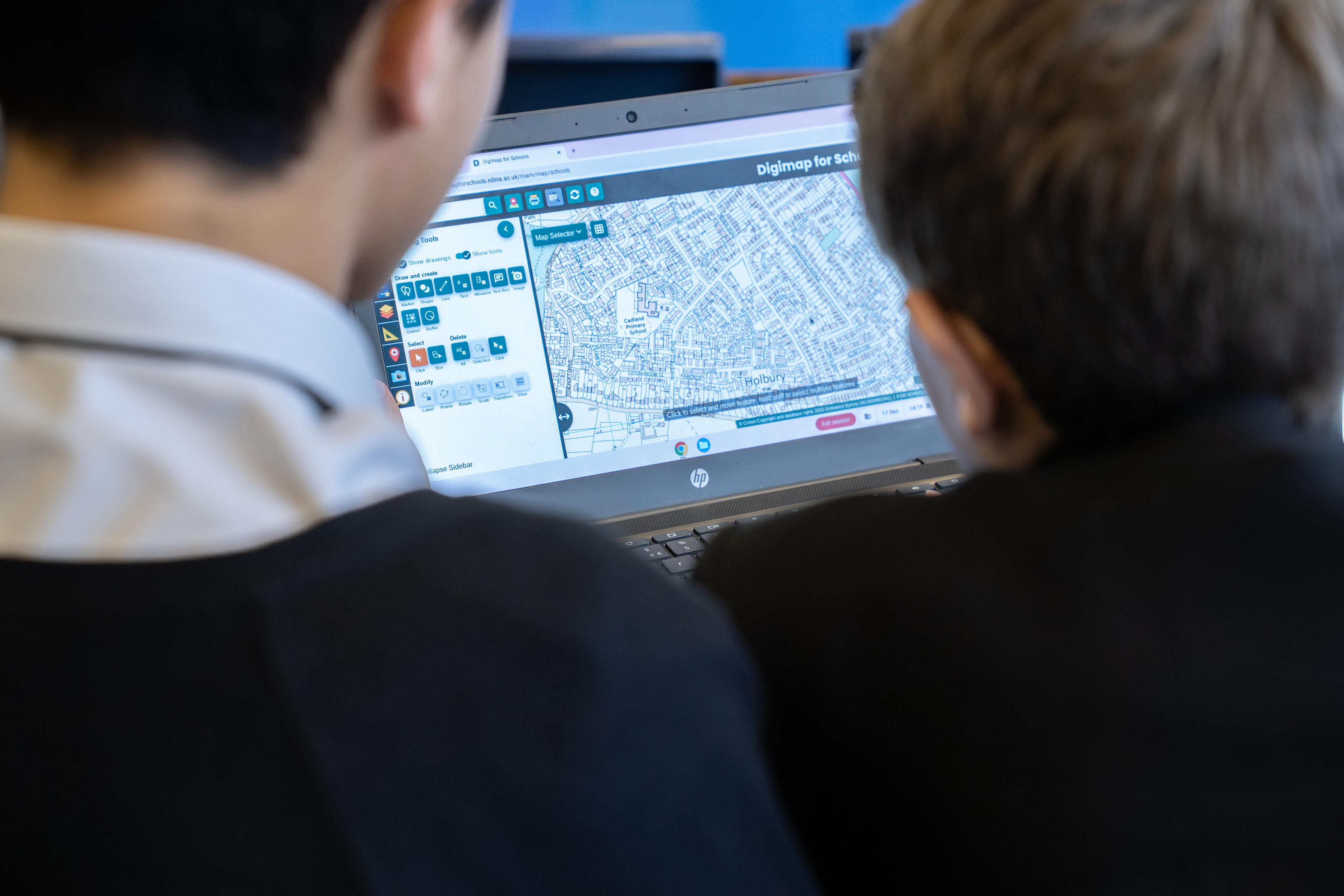
Some will ask about the continuing lack of take-up for GIS despite the availability of free tools such as ArcGIS and its related apps.
Some will be thinking about the place of AI in this...
Some will be considering the powerful pedagogies (echoing the work of Margaret Roberts) that are required to turn the words on the page of new documentation into the enacted curriculum. I've written about that before.
"Music excites when it is performed" - Benjamin Britten
Some will say nothing today as there is much to emerge over the next two years ahead of any impact in schools.
Some will wonder about the impact on option numbers and job security, or the state of the teaching workforce.
Some will not know any of this is happening because they're getting on with the day job... and that's fine...
What are you thinking?
Here's an implementation timeline...
Others will respond over the coming months.
The RGS and the GA will swing into action once things become clearer to support geography teachers through the changes ahead.
Thanks in advance to everyone who is going to be involved in that work.
Curriculum and Assessment Review Report by Alan Parkinson